
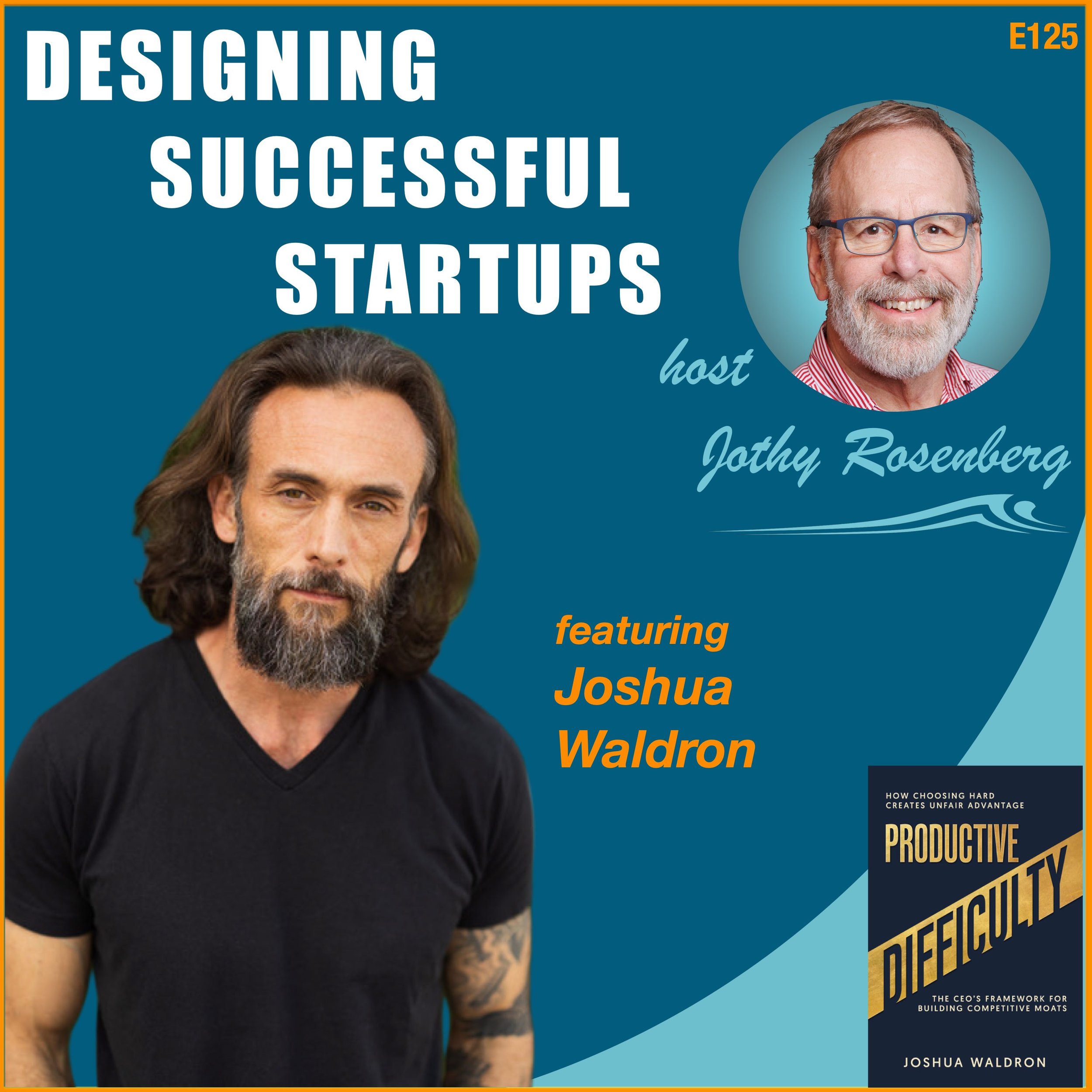
Hard Is Fun—Building a $70M Company in an Industry Everyone Else Avoided
In this episode of Designing Successful Startups, host Jothy Rosenberg speaks with Joshua Waldron, entrepreneur and author of Productive Difficulty, about deliberately choosing hard paths to create opportunity. Joshua shares how overcoming paralysis after a teenage car accident shaped his resilience and later inspired him to enter a highly regulated industry others avoided, ultimately building a company to $70 million in annual revenue. He discusses vertical integration, costly lessons from scaling without proper infrastructure, and why founders should pursue the “right practices” rather than blindly follow best practices. The conversation explores grit, competitive moats, and finding opportunity in difficulty.
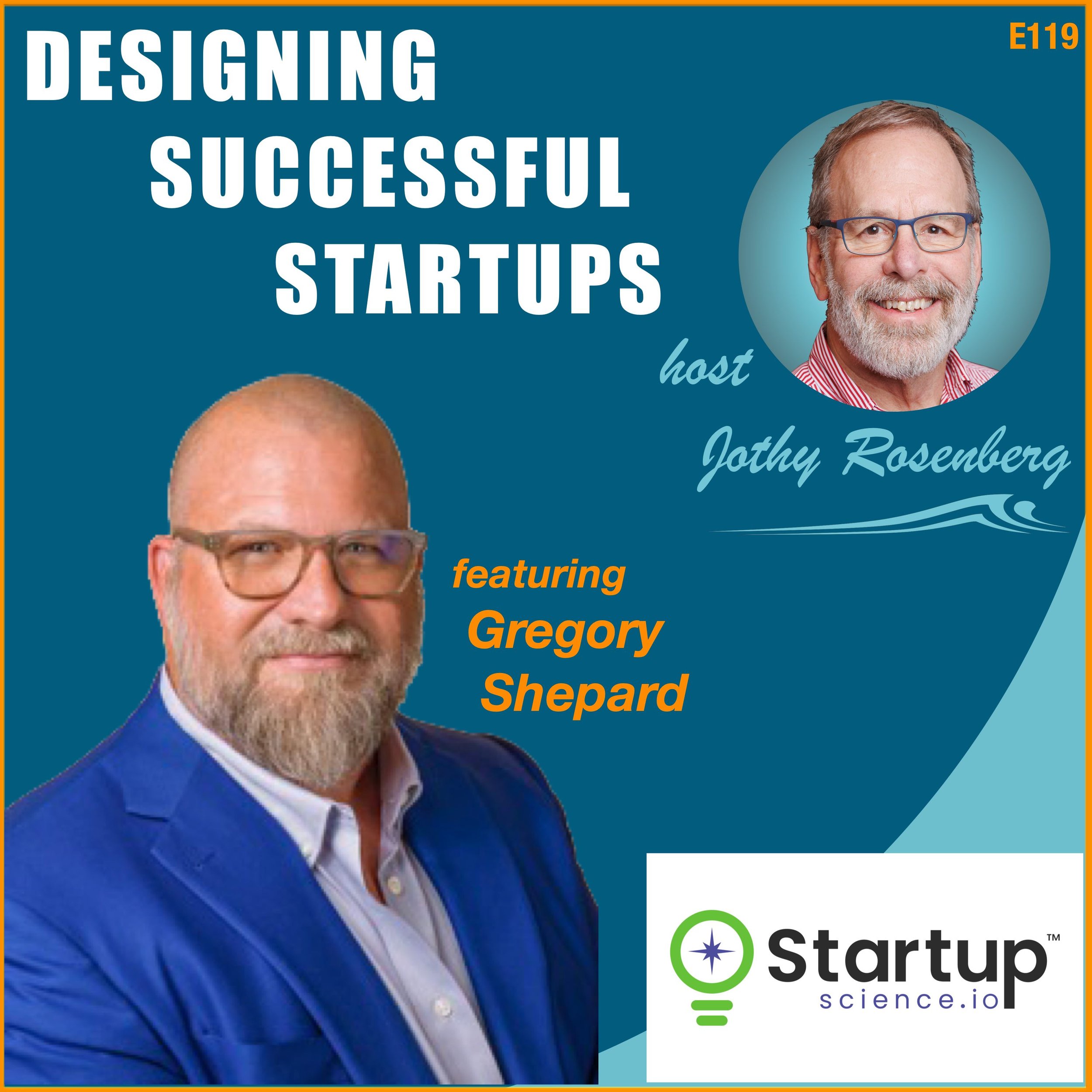
Rattlesnakes, Homesteading, and 13 Startups
In this episode of Designing Successful Startups, host Jothy Rosenberg speaks with Gregory Shepard, a serial entrepreneur known as the Startup Architect, about why startups fail and how founders can improve their odds. Drawing on research involving thousands of interviews, Gregory explains why the first 18 months are critical, the importance of validating the market before building, and why founders should consider their exit strategy from day one. The conversation also explores productivity, AI, neurodivergence, resilience, and Gregory’s five-part formula for entrepreneurial grit: focus, drive, enthusiasm, discipline, and optimism.
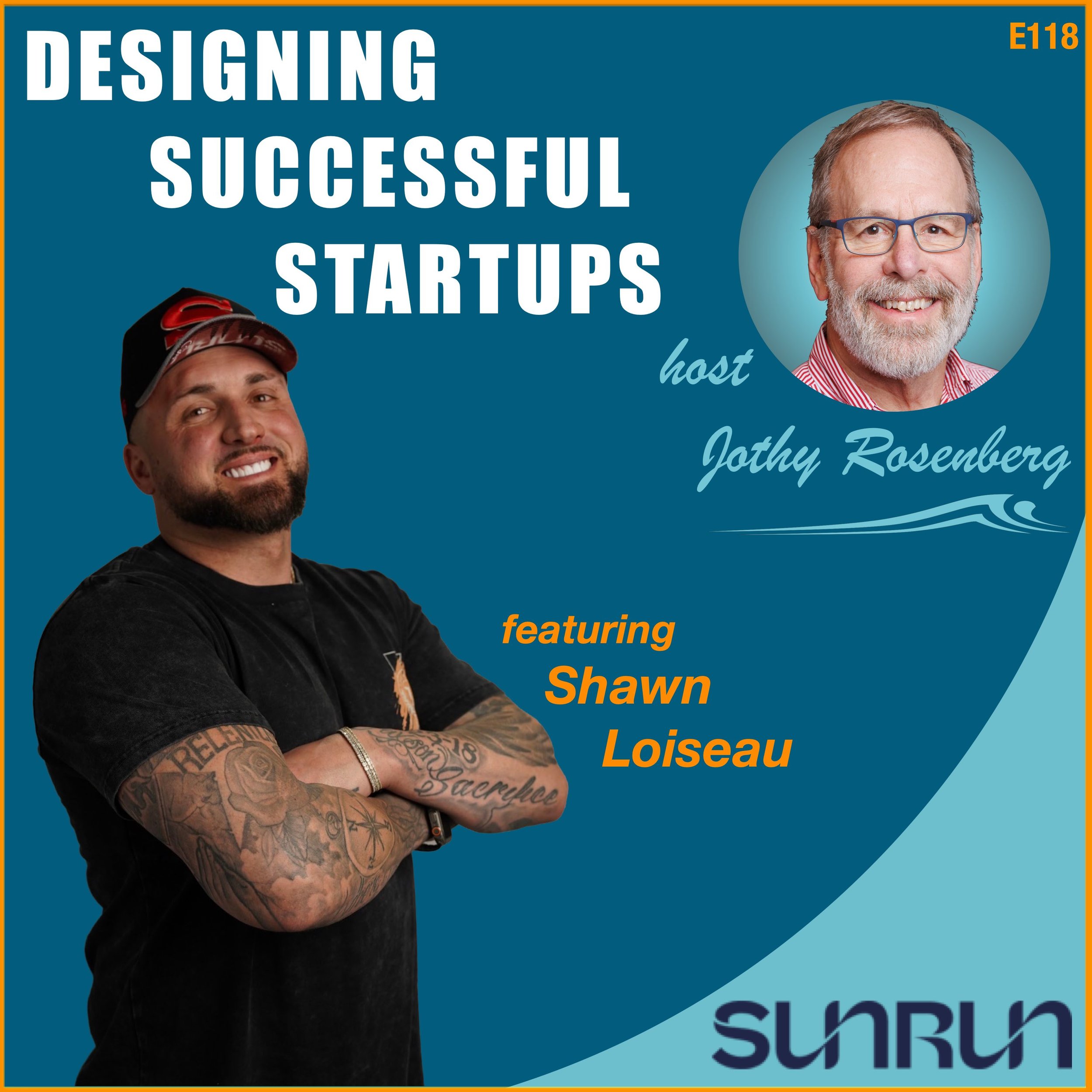
Run Toward the Storm—An NFL Linebacker's Playbook for Startup Grit
In this episode of Designing Successful Startups, host Jothy Rosenberg speaks with Shawn Loiseau, a former NFL linebacker turned entrepreneur, about transforming discipline and resilience into business success. Shawn shares how being overlooked fueled his work ethic, taking him from Division II football to the NFL and later into nutrition, gym equipment, real estate, and solar. He explains why pain tolerance is a powerful entrepreneurial advantage, how treating customers well became his best marketing strategy, and why success comes from pursuing purpose rather than money. The conversation highlights persistence, passion, and confronting challenges head on.

From Birth Doula to the Pentagon—Alex Porter on the Nonlinear Path to AI Infrastructure
In this episode of Designing Successful Startups, host Jothy Rosenberg speaks with Alex Porter, CEO and co-founder of ModTech Labs, about her unconventional path from doula and designer to tech entrepreneur. Alex explains how ModTech Labs evolved from 3D content optimization into an AI orchestration platform that helps organizations use existing computing infrastructure more efficiently. She discusses breaking down technology silos, integrating AI with legacy systems, tailoring product messaging to different stakeholders, and expanding into the defense sector. The conversation also explores entrepreneurship, resilience, and why meaningful success often takes years of persistence.
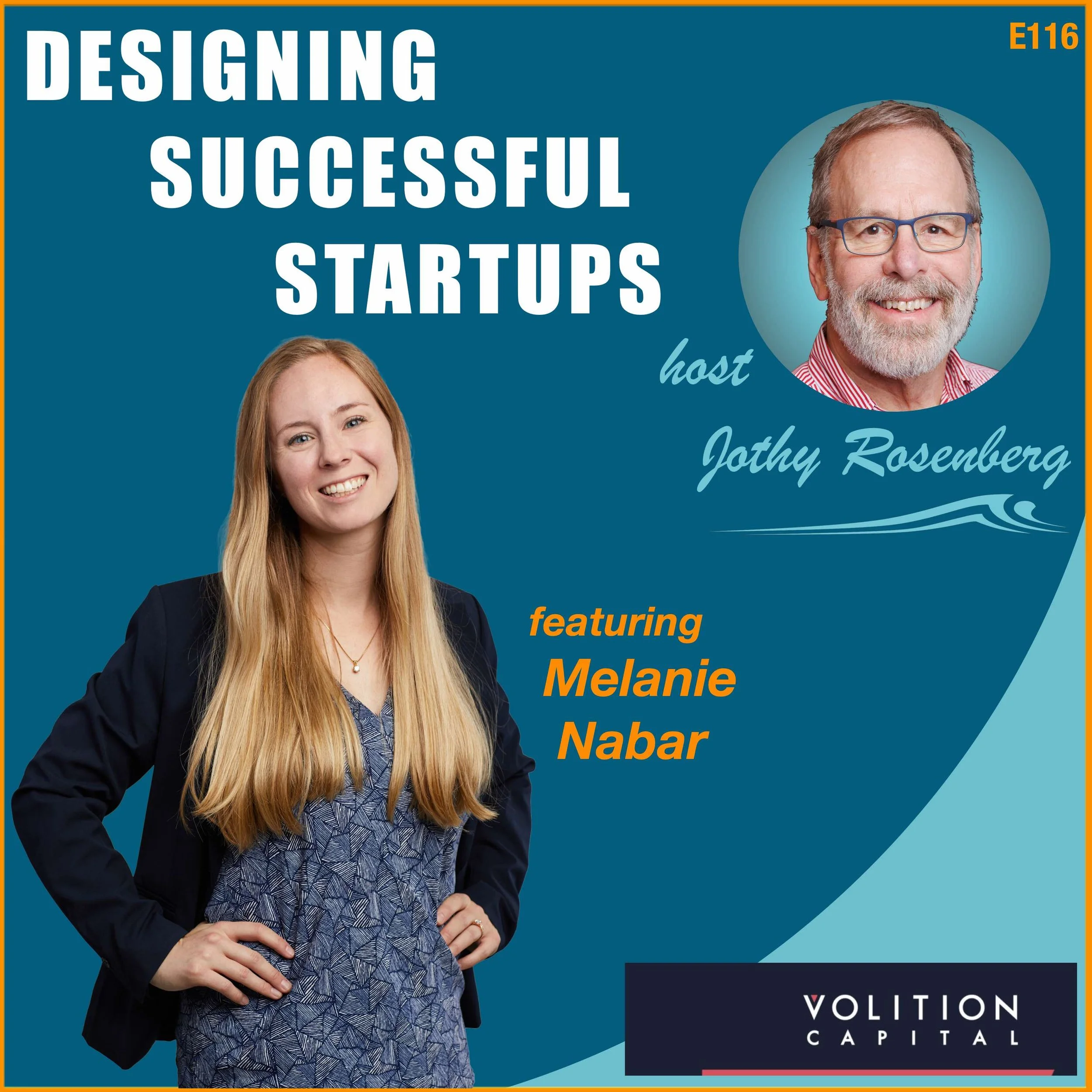
Longer Than Most Marriages—Choosing the Right Investor
In this episode of Designing Successful Startups, host Jothy Rosenberg speaks with Melanie Nabar, a growth equity investor, about what investors actually look for when choosing companies to back. Melanie explains why capital efficiency, strong unit economics, an exceptional management team, and a bold long term vision matter. She also reveals how an investor’s fund stage can influence pressure to raise or sell, why founders should diligence investors as carefully as investors diligence them, and how the right growth equity partner can help companies avoid costly scaling mistakes. The conversation also explores grit, resilience, and scrappiness.
From Boardroom to Sugar House—A Deloitte Partner's Sweetest Pivot
In this episode of Designing Successful Startups, host Jothy Rosenberg speaks with April Lemay, founder of April’s Maple, about leaving a successful 17 year career as a Deloitte partner to build a premium maple business in rural Vermont. April shares how the skills she developed in consulting translated directly into entrepreneurship, from leadership and sales to financial management. She also discusses the realities of farming, product innovation, managing sustainable growth, and why knowing your limits, asking for help, and staying true to your values are essential to building a lasting business.
Accidentally on Purpose: How Aaron Alpeter Built a Supply Chain Empire Three Startups at a Time
In this episode of Designing Successful Startups, host Jothy Rosenberg speaks with Aaron Alpeter, founder of ISBA Group, about why operational excellence is often the difference between startups that scale and those that stall. Drawing on his experience at Unilever and helping create more than $2.5 billion in founder exits, Aaron explains the importance of supply chain strategy, unit economics, and building systems that can grow beyond the founder. The conversation also explores fundraising discipline, scaling responsibly, and how grit, curiosity, and long term thinking shape successful entrepreneurs.
People Debt—The Hidden Cost Every Startup Founder Is Already Paying
In this episode of Designing Successful Startups, host Jothy Rosenberg speaks with Abby Gates, founder of Sproutwise, about why people strategy is a startup’s most overlooked competitive advantage. Drawing on 16 years of startup experience, including multiple acquisitions and an IPO, Abby explains the concept of “people debt” and how poor hiring, unclear values, and accidental culture can undermine growth. She shares practical insights on behavioral interviewing, values driven leadership, onboarding, and building intentional cultures from day one. The conversation also explores vulnerability, resilience, and the role of grit in both leadership and entrepreneurship.
The Security Bulldog's Jeff Majka on AI, Grit, and Fighting Human Nature
In this episode of Designing Successful Startups, host Jothy Rosenberg speaks with Jeff Majka, founder of The Security Bulldog, about building AI driven cybersecurity tools that address the human side of security. Jeff explains why cybersecurity is fundamentally a people problem, how AI and automation can help overwhelmed security teams make faster decisions, and what he learned from multiple startups about staying lean and finding product market fit. The conversation also explores founder grit, realistic expectations, and why persistence, rather than perfect timing, is often the key to entrepreneurial success.
Incorruptible: Eric Ries on Why Most Startups Lose Their Soul—and How Yours Won't
In this episode of Designing Successful Startups, host Jothy Rosenberg speaks with Eric Ries, author of The Lean Startup and Incorruptible, about the principles that have shaped modern entrepreneurship. Eric explains the origins of concepts like MVPs and pivots, why mission driven companies consistently outperform, and how founders can measure progress before achieving product market fit. He also shares his vision for redefining profit around human flourishing rather than pure financial gain. The conversation explores startup resilience, founder leverage, AI’s impact on entrepreneurship, and how mission and culture create lasting competitive advantage.
Bench-Warm Your Team Before You Need Them
In this episode of Designing Successful Startups, host Jothy Rosenberg speaks with Michael Krause, a technology entrepreneur and founder of Dark Yeti, about decades of building, scaling, and investing in tech companies. Michael shares lessons from helping Acquia grow its enterprise business to over $200 million in annual revenue and launching Scorm Bench, an AI-powered SaaS product built with his family. He discusses why founders should build relationships with future talent before they need them, the importance of aligning team playbooks, and why communication can be a startup’s greatest risk or reward.
No Code, No Problem—How a Speech Pathologist Built an AI Startup
In this episode of Designing Successful Startups, host Jothy Rosenberg speaks with Amy Briggs, founder of Aviva, about building an AI powered parenting app without a technical background. Amy shares how her experience as a speech pathologist revealed the overwhelming mental load parents face, inspiring her solution. She explains how she created a manual MVP to validate demand, achieved early organic growth with zero customer acquisition cost, and leveraged curiosity and resourcefulness to learn on the fly. The conversation highlights grit, optimism, and how non technical founders can successfully bring ambitious ideas to life.

Paper Walls—Jermaine Ee on Pushing Through the Limits You Think Exist
In this episode of Designing Successful Startups, host Jothy Rosenberg speaks with Jermaine Ee, a serial entrepreneur, about building meaningful ventures and learning through failure. Jermaine shares how conflict avoidance nearly derailed a business, the importance of candid leadership, and why challenging assumptions can unlock growth. He also explains the inspiration behind Airlight, an AI driven estate planning platform born from a personal conversation about clarity and fear in retirement. The conversation highlights grit, curiosity, and the power of showing up consistently as the foundation for long term success.
From Zero Equity to Founder—Victoria Vaughan on Betting on Yourself
In this episode of Designing Successful Startups, host Jothy Rosenberg speaks with Victoria Vaughan, founder of B612, about her transition from scaling a 15 million reader media company to building her own PR firm. Victoria shares how niching into the blockchain space reduced competition and fueled growth through referrals. She explains how founders can handle early PR themselves using low cost tools and thought leadership. The conversation also explores overcoming fear, building financial stability, and why authentic relationships and strategic positioning are key to long term success in PR and entrepreneurship.
From Wonder Bread to 300 Million Student Responses—Brad Heilman on Building What Doesn't Exist
In this episode of Designing Successful Startups, host Jothy Rosenberg speaks with Brad Heilman, co founder and COO of Exploros, about building impactful edtech solutions and the mindset behind sustained innovation. Brad shares how early entrepreneurial thinking, like optimizing margins as a teenager, shaped his approach to business. He explains how Exploros enhances classroom engagement by giving every student a voice through real time, teacher guided technology. The conversation also explores major challenges in education, including student disengagement and teacher overload, and how grit, discipline, and martial arts training have shaped his resilience as a founder.
From Dropout to 18% Monthly Growth: Building Cody with Barak Glanz
In this episode of Designing Successful Startups, host Jothy Rosenberg speaks with Barak Glanz, co founder and CMO of coding education platform Codi. Barak shares how he and his co founders bootstrapped the company as students and grew it by turning coding into a daily habit through bite sized challenges inspired by Duolingo. He explains how guerrilla marketing and early TikTok influencer campaigns helped them find scalable customer acquisition channels. The conversation also explores leadership lessons from his military service, the importance of retention and habit formation, and why embracing failure is essential to entrepreneurial grit.
From Spare Bedroom to Market Dominance: Samuel Thimothy's 20-Year Playbook
In this episode of Designing Successful Startups, host Jothy Rosenberg interviews Samuel Thimothy, co founder of OneIMS, about building a marketing agency from a spare bedroom to a 50 person global team. Samuel shares how early mistakes, especially saying yes to everything, nearly derailed the company and how focusing on a clear niche transformed their trajectory. He explains his growth framework, acquisition plus retention equals growth, and why controlling lead flow is critical to scaling. The conversation also explores grit, gratitude, and how an immigrant mindset shaped his long term resilience and leadership philosophy.

You Can’t Scale Heroics—Building the Team and Culture That Grows With You
In this episode of Designing Successful Startups, host Jothy Rosenberg sits down with Talin Andonians, a seasoned scaling operator who steps in when fast growing startups hit their most critical inflection points. Talin shares her five pillars of scaling, covering strategy, process, people, culture, and financial rigor. Drawing on her experience as a COO and CEO across multiple industries, she explains why you cannot scale heroics, why go to market and operations must stay in lockstep, and how founders must confront tough people decisions with clarity and respect.
The Librarian Who Wants You to Slow Down-HB
In this episode of Designing Successful Startups, host Jothy Rosenberg speaks with Jill Heinze, founder of Saddle Stitch Consulting, about the real risks and responsibilities of building with AI. Jill shares how her background in librarianship and UX research shapes her human centered approach to technology governance. Together, they explore why most organizations fail to see ROI from AI, how unchecked optimism can damage trust and reputation, and why founders must understand what they are building, breaking, and risking. The conversation reframes AI risk as an opportunity for better design, accountability, and long term value.
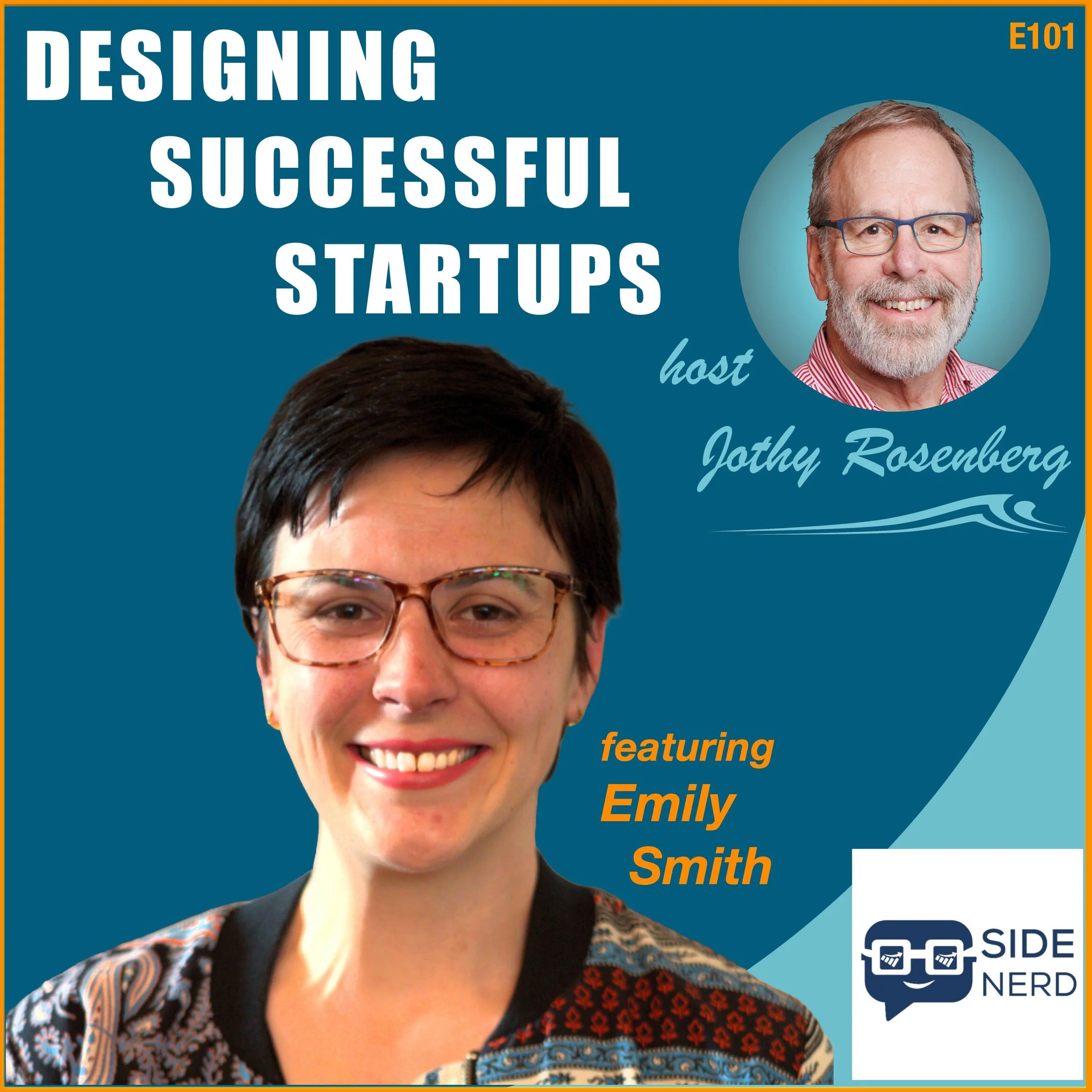
Anxious and Building Anyway: How Emily Smith Turned Fear Into Startup Fuel
Starting from a simple insight about accessibility, host Jothy Rosenberg talks with founder Emily Smith about building software that actually helps people instead of intimidating them. Emily shares how volunteering exposed the barriers many face with apps and logins, leading her to create Side Nerd, a text-first interface that turns natural language into structured business data. She reflects on bootstrapping solo, rebuilding her platform from scratch, and why becoming her own technical cofounder mattered. The conversation explores inclusive design, workflow pain points, and how living with anxiety shaped her grit and comfort with uncertainty.